


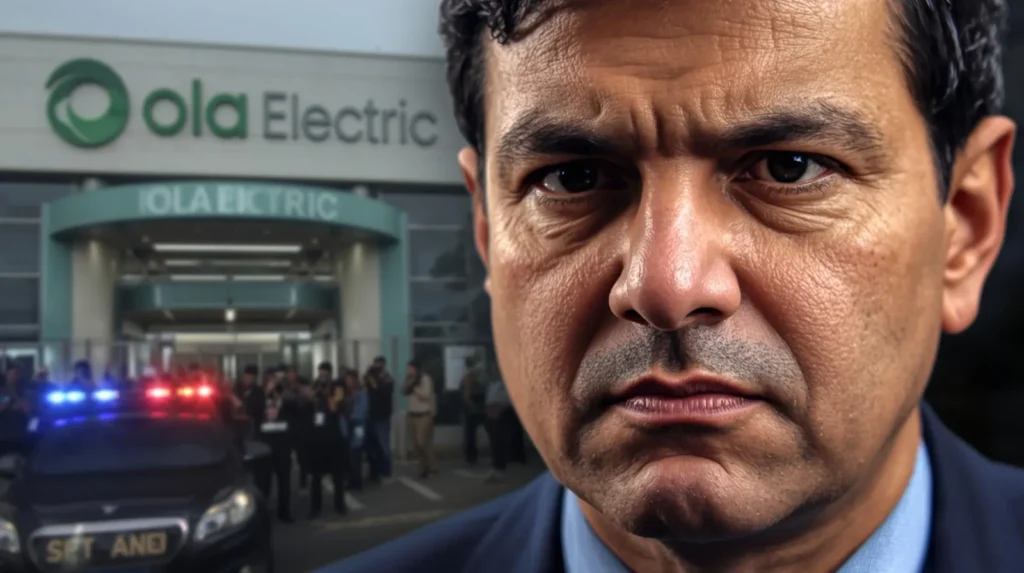
A serious turn for the EV-world: Ola Electric workplace harassment case
It probably feels surreal, but the term “Ola Electric workplace harassment” is now front and centre in India’s tech-and‐mobility headlines. The CEO of Ola Electric, Bhavish Aggarwal, along with a senior executive, has been booked by Bengaluru police amid allegations of workplace harassment following an engineer’s death by suicide.
You know how you hear of high-flying tech startups, brilliant electric vehicles, big aspirations—and you tend to assume the work culture is as shiny as the product. Well, this case is forcing a different narrative.
What actually happened
Here’s a breakdown (and yes, it might feel heavy, but the details matter). The engineer, K Aravind (38), working since 2022 as a homologation engineer at Ola Electric, allegedly died by suicide on September 28 in Bengaluru. According to police, he left a 28-page handwritten note in which he blamed Bhavish Aggarwal and another official, Subrat Kumar Dash, for mental harassment, unpaid dues and intense workplace pressure. On top of that, his brother says a large bank transfer (₹17.46 lakh) into the engineer’s account two days after his death raised serious suspicions.
To be fair, Ola Electric says the payment was a full and final settlement, that no official complaint was raised by the deceased during his tenure, and that his role did not involve direct interaction with top management.
Why this case matters for the culture of mobility start-ups
If you think about it, the “Ola Electric workplace harassment” story isn’t just about one engineer and one company. It’s about the collision of ambition, growth, human pressure and corporate responsibility.
Start-ups in the electric-vehicle sector (and beyond) often push for fast results, tight deadlines, rapid scale. That’s great in one sense. But when employees are under un-seen stress, when dues get delayed, and when there’s a feeling they can’t speak up—well, the risk is there.
In everyday terms: imagine you’re working at a job where you feel you must always run faster, harder, without pause. You’re told everything matters yesterday. You believe you’re being ignored or squeezed. Over time that wears you down. That seems to be the kind of scenario the note describes.
Legal and reputational fallout
The Bengaluru City Police have registered a case under sections of the Bharatiya Nyaya Sanhita (including abetment to suicide) against Bhavish Aggarwal and Subrat Kumar Dash. Ola Electric has challenged the FIR in the Karnataka High Court and sought protection for its leadership.
On the reputation front? Huge. For a company that is meant to be a poster-child of India’s EV revolution, this kind of complaint brings up questions: “Are we looking after the people building it?” “Is the human cost being ignored in pursuit of scale?”
FAQ
Q: What is the focus of the Ola Electric workplace harassment case?
The case centres on allegations of mental harassment, delayed dues, and intense work pressure made by the deceased engineer in a 28-page note, and a subsequent FIR naming the CEO and senior official of Ola Electric for abetment to suicide.
Q: Has any complaint been filed by the employee while working?
According to Ola Electric, no formal grievance regarding harassment or unpaid dues was lodged by the employee during his service.
Q: How has Ola Electric responded?
The company expressed sorrow over the engineer’s death, denied wrongdoing, stated the payment was a final settlement and said it is cooperating with the investigation. It has also challenged the FIR in court.
Q: Why should people care about this?
Because it raises wider concerns about workplace culture—especially in high-growth tech/EV firms. It’s not just about vehicles and growth curves; it’s also about employee wellbeing, accountability and ethics.
Final thoughts
In all honesty, the “Ola Electric workplace harassment” case is unsettling. We often admire the fast-tracking of mobility startups, the innovation, the green-push. But if that comes with a hidden cost—silent pressure, ignored voices, unhappy employees—that push for growth stops being inspiring and becomes questionable.
Maybe this becomes a moment of reckoning for the EV industry in India: a chance to ask, “How do we scale and stay humane?” Because, at the end of the day, the machinery, the factories, the e-scooters—they’re powered by people. And those people deserve transparency, support and fairness just as much as the gadgets do.